

“Close to Zero”
Daniel Ek’s Delusion and the Real Cost of Making Music

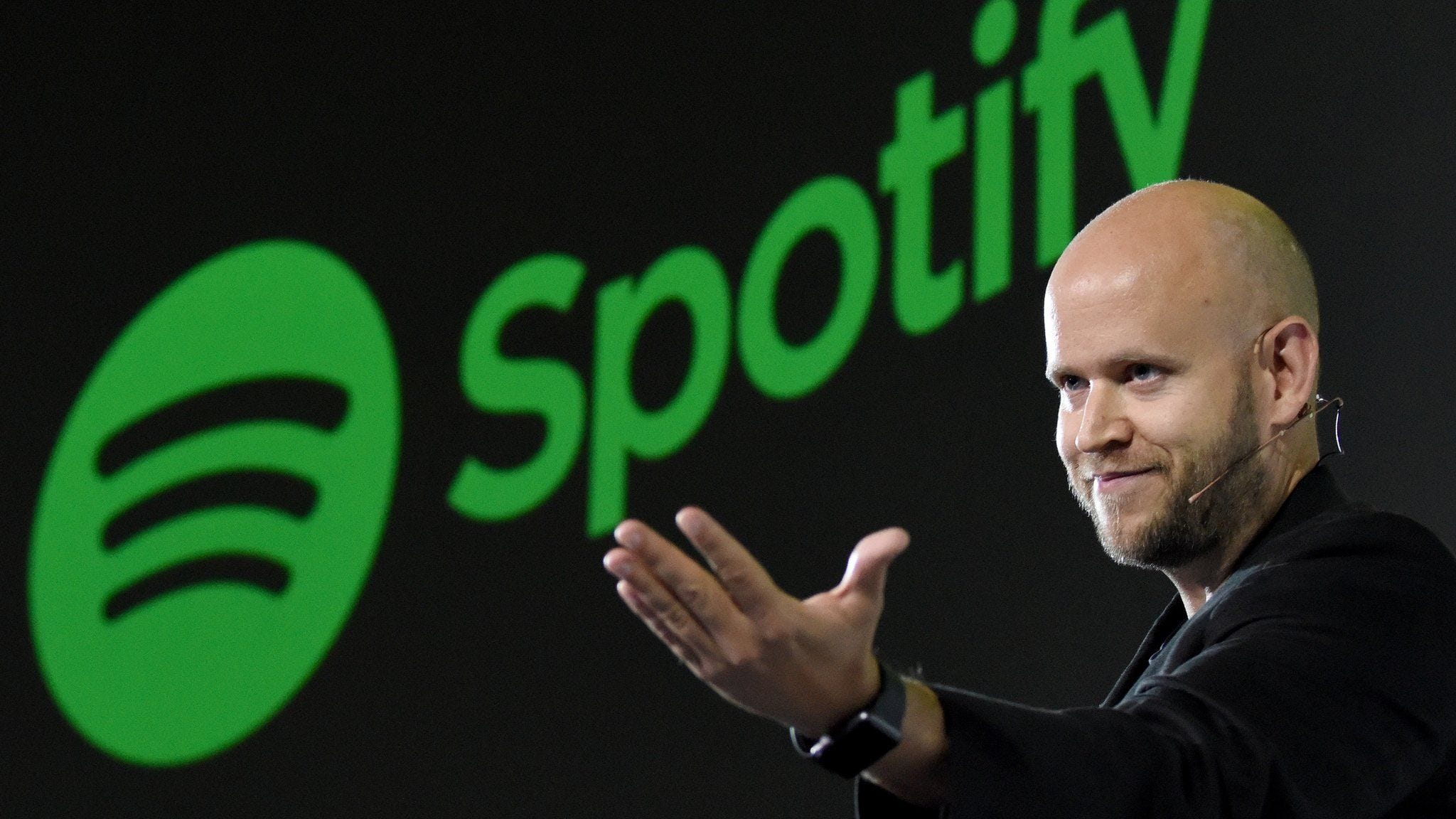
On May 29, 2024, Spotify CEO Daniel Ek tweeted something that sent shockwaves through the music community: “Today, with the cost of creating content being close to zero, people can share an incredible amount of content”. He later attempted to walk back the statement, calling his definition of “content” (yes, he called music “content”) “clumsy” and “very reductive”. But the damage was done, revealing just how disconnected the billionaire architect of modern music streaming is from the actual economics of music creation.
Let me be clear: Daniel Ek has no idea what he’s talking about. The cost of creating music is not “close to zero”—not even remotely. And I’m going to prove it by breaking down the actual costs of producing music across three different scenarios, at three different investment levels, across three different genres.
The Three Scenarios
To illustrate how absurd Ek’s statement is, let’s examine three realistic production scenarios:
The EDM Producer - Solo bedroom producer making electronic music (supposedly the “cheapest” route since you “only need a laptop”)
The Rock Band - Four-piece group with guitars, bass, drums, and vocals
The Van Dweller - Solo singer-songwriter living in a van with just a guitar
For each scenario, I’ll break down costs at three levels: Basic (free/minimal cost tools), Medium (premium consumer tools), and Professional (industry-standard production).
Scenario 1: The EDM Producer
Basic Level (Free/Minimal Tools)
Even at the absolute bare minimum, an EDM producer needs:
Laptop: You can’t make music on a broken computer. A basic music-production-capable laptop starts at $300-600 for used/entry models
DAW: Free options exist (GarageBand, Reaper trial, LMMS) - $0
Cover art: Canva Free - $0
Distribution: DistroKid Musician plan - $24.99/year
Total Basic Cost: $325-625 (first year), then $25/year recurring
But wait—this doesn’t include YouTube Content ID ($4.95 per single annually), which means you can’t monetize your music on YouTube without paying Spotify’s competitor. It also doesn’t include any sample packs, plugins, or the fact that free DAWs are severely limited.
Medium Level (Premium Consumer Tools)
Now let’s step it up to what most serious independent producers actually use:
Laptop: Mid-range production laptop - $800-1,300
DAW: FL Studio Producer Edition or Ableton Live Standard - $199-449
Cover art: Canva Pro - $119.99/year
AI Mastering: LANDR Studio subscription - $143.88/year
Distribution: DistroKid Musician + YouTube Content ID - $30-45/year
Essential plugins/samples: Budget $200-500 for basics
Total Medium Cost: $1,492-2,456 (first year), then $294-408/year recurring
Professional Level (Industry Standard)
This is what you need to compete at a professional level:
Laptop: MacBook Pro 14” or equivalent - $1,500-2,500
DAW: Ableton Live Suite, Logic Pro, or FL Studio All Plugins - $449-749
Professional mixing: $300-700 per track
Professional mastering: $50-150 per track
Cover art: Professional designer - $150-500
Distribution: Professional tier with full services - $100-300/year
Total Professional Cost (single track): $2,549-4,899, with $100-300/year recurring costs
For a full EP (5 tracks), you’re looking at $4,049-9,199 in the first year.
Scenario 2: The Rock Band
This is where Ek’s “close to zero” claim becomes truly laughable.
Basic Level (Used Gear, DIY Everything)
Instruments: Used guitar ($200), used bass ($200), used drum kit ($300-600), used amplifiers ($150 each for guitar/bass)
Practice space: $200-400/month (you can’t practice a full rock band in an apartment)
Recording: DIY with basic audio interface ($100), cheap mics ($200 for a few SM57s)
Cover art: Canva Free - $0
Distribution: DistroKid - $25/year
Total Basic Cost: $1,425-1,925, plus $2,400-4,800/year for practice space
Medium Level (New Mid-Range Gear)
Instruments: New guitar ($500-800), new bass ($500-700), new drum kit with hardware and cymbals ($1,200-2,000)
Amplifiers: Mid-range amps ($400 each for guitar/bass)
Practice space: $300-500/month - $3,600-6,000/year
Recording: Home studio setup with decent interface and microphones - $800-1,500
Cover art: Canva Pro - $120/year
AI Mastering: LANDR - $144/year
Distribution: DistroKid full features - $50/year
Total Medium Cost: $7,914-12,714 (first year), then $3,914-6,314/year recurring
Professional Level (Studio Production)
Studio recording time: $400-1,000 per song (full band arrangements are complex)
Professional mixing: $400-900 per track
Professional mastering: $100-250 per track
Cover art & design: Professional package - $500-1,000
Distribution: Professional - $300/year
Total Professional Cost (5-song EP): $5,800-12,050, plus $300/year recurring
This doesn’t even factor in instrument maintenance, string replacements, drumhead replacements ($75-300 for a full set), travel to the studio, or any of the other countless expenses.
Scenario 3: The Van Dweller
This is perhaps the most telling scenario—someone who has deliberately minimized their living expenses to pursue music. Surely this is “close to zero,” right? Wrong.
Basic Level (Absolute Minimum)
Acoustic guitar: Used - $100-300
Guitar strings: $20-40/year (if you’re lucky)
Smartphone for recording: $200-400 (assuming they already have one, but it’s still a cost)
Cover art: Canva Free - $0
Distribution: DistroKid - $25/year
Total Basic Cost: $345-765, plus $45-65/year recurring
But this assumes recording on a phone provides acceptable audio quality (it often doesn’t) and that the van dweller has reliable internet access for uploading music.
Medium Level (Semi-Professional Mobile Setup)
Better guitar: $400-800
Portable audio interface: $150-300
Decent microphone: $100-200
Laptop (see above): $800-1,300
Cover art: Canva Pro - $120/year
AI Mastering: LANDR - $144/year
Distribution: DistroKid - $50/year
Total Medium Cost: $1,764-2,914 (first year), then $314-414/year recurring
Professional Level (Remote Professional Production)
Professional guitar: $1,000-2,000
Professional recording setup: $1,000-2,000
Professional mixing: $300-700 per track
Professional mastering: $50-150 per track
Cover art: Professional - $300-500
Distribution: $300/year
Total Professional Cost (5-song EP): $4,700-8,150, plus $300/year recurring
The Reality Ek Refuses to See
When artist Cheryl B. Engelhardt responded to Ek’s tweet, she revealed she’d invested “thousands of dollars” into her Grammy-nominated album—an album she produced and mixed herself. Indie artist Shimmer Johnson called Ek “out of touch,” noting how his wealth was “built on the hard work and time of others”. Primal Scream’s bassist Simone Marie Butler called him an “out of touch billionaire”.
They’re all correct. Daniel Ek’s statement wasn’t just tone-deaf—it was a fundamental misunderstanding (or deliberate misrepresentation) of what music creation requires. Yes, the barrier to entry has lowered compared to the pre-digital era when you needed access to expensive recording studios. But “lower barriers” doesn’t mean “close to zero cost.”
Even the cheapest possible music production—a solo producer with a used laptop and free software—requires hundreds of dollars in initial investment and recurring annual costs. Scale up to anything approaching professional quality, and you’re looking at thousands of dollars per release. And this doesn’t even account for the most expensive resource of all: time. The hundreds or thousands of hours spent learning production techniques, practicing an instrument, writing songs, and refining mixes.
The Audacity of It All
What makes Ek’s statement particularly galling is the timing. He made these comments just before Spotify announced its second price increase in a year, raising individual subscriptions to $11.99/month. So music costs “close to zero” to make, but Spotify needs to charge listeners more while continuing to pay artists fractions of pennies per stream?
The math doesn’t work. The logic doesn’t work. The statement reveals a CEO who sees music not as art requiring investment, skill, and resources, but as “content”—an infinite, valueless commodity to be monetized by his platform while the actual creators struggle to break even on their production costs.
Daniel Ek doesn’t make music. He’s never had to save up for a guitar, a laptop, or studio time. He’s never had to choose between paying for distribution or paying for groceries. He’s never experienced the reality that every independent musician knows: making music is expensive, time-consuming, and often financially unsustainable.
Note: prices here are vague estimates based on current market ranges, not exact science—gear fluctuates, deals pop up, your location tweaks it all.